How it works
From one photo to your next look.
See how the private detector, your free result and the optional styling report fit together — including what the measurements can and cannot tell you.
Find My Face Shape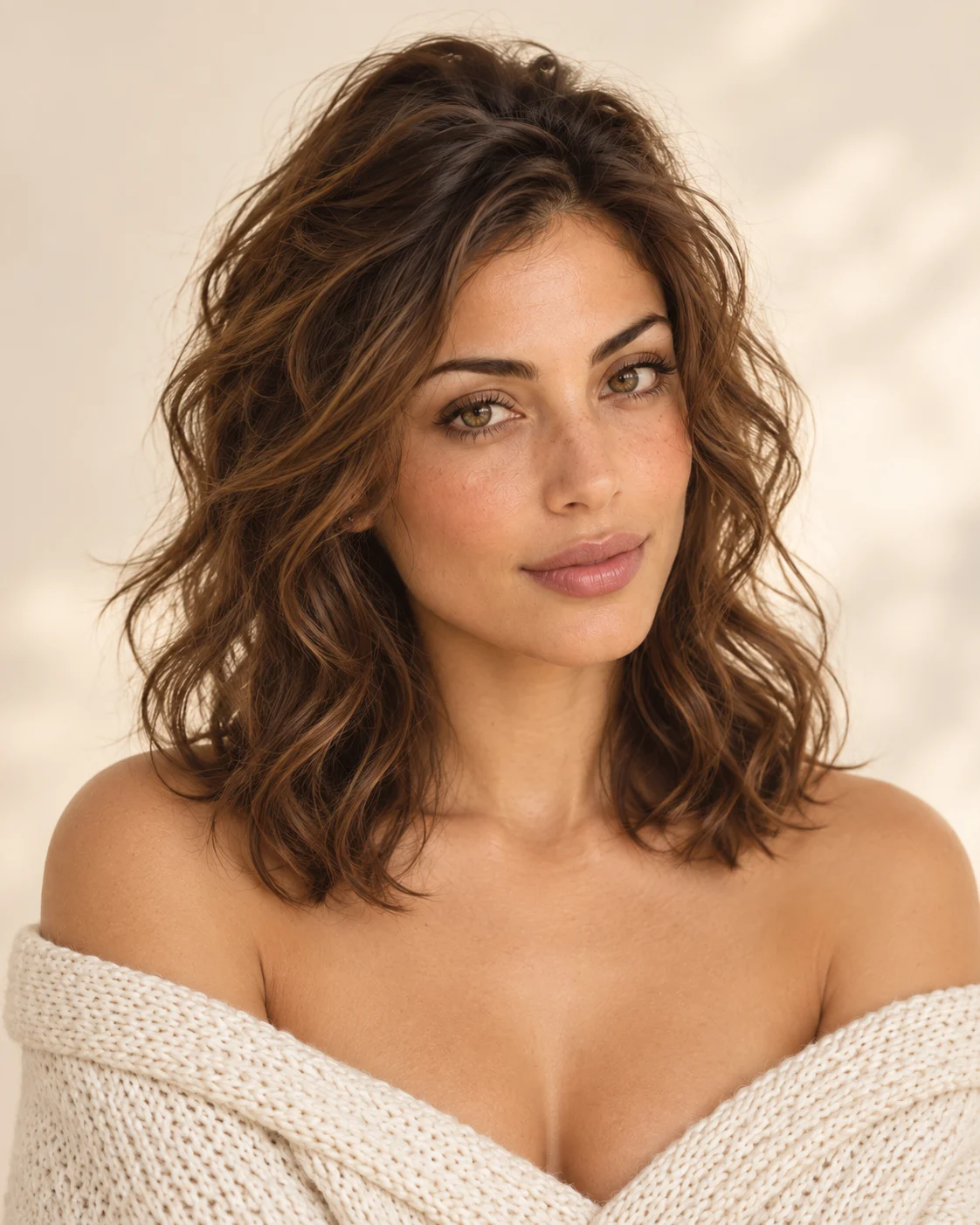 AI-generated styling example

- 01
Upload a photo
Choose one clear, front-facing photo. It is analyzed in your browser and never uploaded to our servers.
- 02
Get your analysis
The detector maps facial landmarks and measures your proportions. If two shapes are close, your result includes both.
- 03
Choose your next step
Explore free hairstyle and glasses guidance, or create a private report with recommendations built around your measurements and preferences.
What your result means
The free detector measures facial landmarks locally in your browser. On 1,000 held-out faces from the Kaggle niten19 Face Shape Dataset (CC0), it matched the dataset label 58.8% of the time across five shapes. Diamond and triangle were not in that test. Pose, lighting, hair and the difference between landmarks and tape measurements can affect your result. This is styling guidance, not a beauty score. Read the full methodology →
YourFaceShape measures face shape in two ways, and they are not the same ruler. The mirror quiz asks what you see. The photo detector reads landmarks on a picture and compares them with labelled photos. One face can be one shape in the quiz and a neighbour in the photo. That is a difference in method, not a grade.
The 60-second answer:
- The quiz is eight mirror questions and needs no photo.
- The detector uses a straight-on photo and runs in your browser.
- Quiz length is hairline to chin. Photo length is a forehead landmark to the chin, scaled by 1.12, over cheekbone width.
- A gap under 0.15 between the top two shapes returns "between A and B" on either tool.
- Neither tool uses the old 1.65 oblong target.
- The shipped detector matched 58.8% of 1,000 held-out faces across five shapes. Chance is 20%.
Quiz versus photo detector
| Mirror quiz | Photo detector | |
|---|---|---|
| Input | Eight mirror questions | One straight-on photo, read in the browser |
| Length | Hairline to chin, judged in the mirror | Forehead landmark to chin, × 1.12, over cheekbone width |
| Width | Forehead, cheekbones, and jaw compared directly | Forehead-to-cheekbone and jaw-to-cheekbone ratios |
| Shapes | All seven from answer points | Five scored, plus diamond and triangle rules |
| Blend | "Between A and B" when the top two shares are under 0.15 apart | "Between A and B" when the top two probabilities differ by under 0.15 |
| Privacy | No photo is used | Photo never leaves the browser |
Use the face shape quiz with a mirror, or the face shape detector if the photo should stay in the browser. The seven face shapes name the labels, and hairstyles for your face shape turn a label into a cut.
If the top two shapes are close — a probability gap under 0.15 — either tool says "between A and B". Read both guides. Many faces are a blend.
The mirror quiz
The quiz is eight questions. You compare your forehead with your jaw, whether your face is about as long as it is wide or about 1.5 times longer, how the jaw turns the corner, where the face is widest, the chin, cheekbones against the forehead, jaw against the cheekbones, and whether the sides run straight, curved or angled in.
Each answer adds points toward one or more of the seven shapes: oval, round, square, heart, oblong, diamond and triangle. The points are turned into shares of one. If the first and second shares differ by less than 0.15, the result says "between A and B" instead of forcing one name.
What length the quiz uses
The length you are judging is from the center of the hairline to the tip of the chin. "Much longer (about 1.5 times or more)" is a choice you make in the mirror. It is not a calculated cutoff of 1.65, and the quiz never sees your photo.
An older formula did use fixed length-to-width targets, with oblong aimed at 1.65. We do not run that formula on the quiz or on photos. The shape guides still say "about one and a half times as long as wide" because that is the same mirror description as the quiz option.
The photo detector
The photo tool does not apply those tape targets, and it does not test length against 1.65.
How the ratios are built
Length divided by width is the distance between two face landmarks — one on the forehead, one on the chin — multiplied by 1.12, then divided by the width between the cheekbones. The 1.12 only scales the mesh so it sits nearer a face length. It does not recreate a hairline-to-chin tape.
Forehead width and jaw width are each divided by cheekbone width. A jaw-corner angle and a chin angle are used as well. None of those angles is published as "this many degrees means this shape."
What the training photos showed
The training photos had an average length-to-width of 1.341. Measured ratios mostly sat around 1.28 to 1.42, and forehead-to-cheek ratios around 0.84 to 0.87.
The old oblong target of 1.65, and an old diamond target that wanted the forehead near 0.70 of the cheekbones, almost never occurred in those photos. Using them labelled nearly everyone oval. That is why the photo tool stopped using the tape formula.
Which shapes are scored
Five shapes are scored from those labelled photos: oval, round, square, heart and oblong. Diamond and triangle are extra rules, because the public set has no labels for them.
Diamond requires both the forehead and the jaw to be at least 1.4 standard deviations narrower than the training average. Triangle requires the jaw to be wider than the forehead by at least 5 percent of cheekbone width. Neither rule was checked against labelled photos. If the top two shares differ by less than 0.15, the page says "between A and B".
Your photo is analyzed in your browser and never uploaded to our servers.
Why the two answers differ
Tape length runs from the hairline to the chin. Photo length is a forehead landmark to the chin, scaled by 1.12, over the cheekbones. A tape reading near one and a half times the width can still be a photo ratio in the 1.28 to 1.42 band. About 1.40 is a bit long for a photo.
In the mirror, "about 1.5 times" is the long bin, and it points toward oblong only together with the other answers.
Pose and hair move the label
A low camera widens the jaw. A high camera widens the forehead. Hair over the hairline changes the length you think you see, and it can also hide the forehead point.
If one tool says heart and the other says "between heart and oval", read both guides. Repeat the check with your hair back and the camera at eye level.
What the accuracy figure is
On a held-out set of 1,000 faces, the photo tool matched the dataset's label 58.8 percent of the time across five shapes. Chance is 20 percent. The five-shape model alone matched 60.2 percent of those same 1,000 faces.
The 58.8 percent figure is the shipped tool, including the diamond and triangle rules, which had no labels and did not raise the score. Treat 58.8 percent as a limit of this test, not a promise about your photo.
The dataset
The source is the Kaggle Face Shape Dataset by niten19, released as CC0. The labelled shapes are heart, oblong, oval, round and square. Training used 3,386 photos where a face was detected. The 1,000 are the detected test photos only.
We do not store those images, only the derived numbers, and the demo portraits were not part of the fit or the score. The labels are noisy, especially oval versus heart, which caps any method that uses only landmark ratios. Diamond and triangle sit outside that 58.8 percent because the set has no labels for them.
What we do not score
This site does not rate attractiveness, jawline, or a looks score. A shape names which of the forehead, cheekbones and jaw is widest, and how length compares with width. It is a starting point for hair, glasses and beards. It is not a grade. A blend of two shapes is a normal result.
There is no jaw score and no symmetry rank. A square jaw and a soft jaw are different shapes, not a better and a worse face. A photo ratio near the training average of 1.341 is typical, not a verdict. A mirror answer of "about 1.5 times as long" does not by itself confirm oblong, and it is not the number the photo tool computes.
When the result says "between A and B", read the seven face shapes for both, then open hairstyles for your face shape. You can measure again with the face shape quiz or the face shape detector.
FAQ
Frequently asked questions
What's included in the full report?
The styling kit design includes five hairstyle looks, cut and styling notes, a before-and-after view and a printable salon card. This preview uses an AI-generated sample; it is not a purchased or personalized report.
Is this a subscription?
The design shows a one-time purchase. Checkout in this preview is a demonstration and does not charge you.
How will I receive my report?
Explore the sample report instantly here. You can print it or save it as a PDF using your browser. Personalized report delivery depends on the existing report service being enabled.
Can I get a refund?
No payment is collected in this preview. Terms for any future paid purchase will be shown at checkout.
Is my photo private?
The free face detector processes your photo in your browser. Your photo is not sent to a server for the free analysis. Any optional AI report processing requires a separate, explicit action.
How accurate is face shape analysis?
Face shape is a styling starting point. Lighting, pose and hair can change the result. On the existing five-shape held-out dataset the detector matched 58.8% of labels; diamond and triangle were not included. Read our methodology for the full limits.
Ready to read your own features?
Free analysis. No signup. Your photo stays on your device.
Analyze my face →